Pengboxingchen Editorial Team ·
A Glazed Shop Module in Transit: Reading the Vietnam Delivery Photos
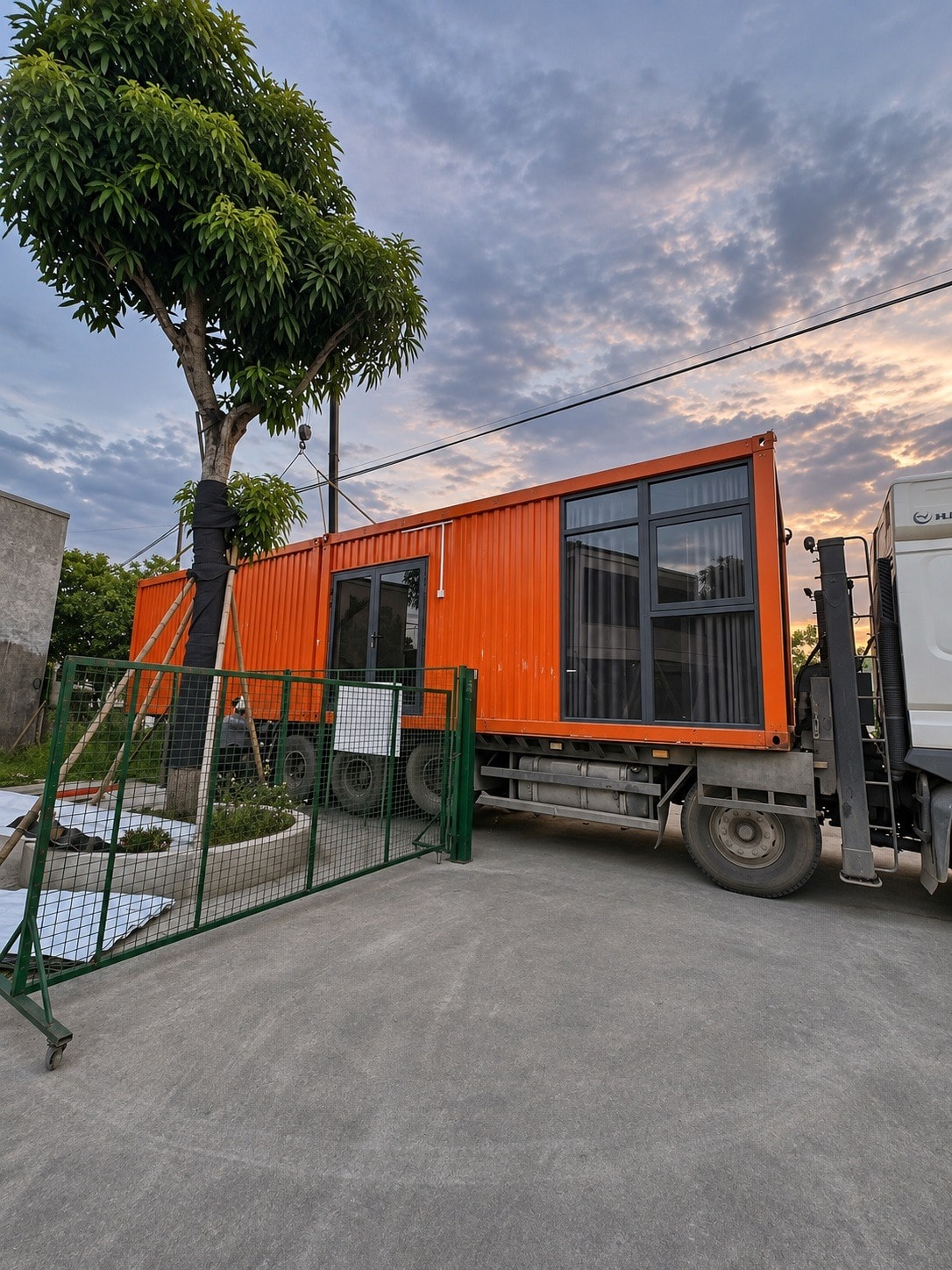
Three company photographs from a Vietnam project show an orange-framed glazed shop module on a truck, with lifting equipment visible in related views. This study explains how to read transport and handling photographs, what condition records to request and how to confirm receiving scope before arrival.
Three company photographs from a Vietnam project show an orange-framed glazed shop module on a truck, with lifting equipment visible in related views. These are transport and handling records — they document the module during the delivery phase. This study explains how to read that kind of photograph, what condition records to request and how to confirm receiving scope before the module arrives on site. Lifting arrangements and rigging decisions are matters for a qualified site team and an approved lift plan; this article does not address them.
What the transport photographs show
The first photograph shows the module loaded on a truck. The orange frame and glazed panels are visible. The module appears intact and the glazing is in place. A second view shows lifting equipment visible nearby. These are transport and handling views — they record the module during the delivery phase, not a specific sequence of events.
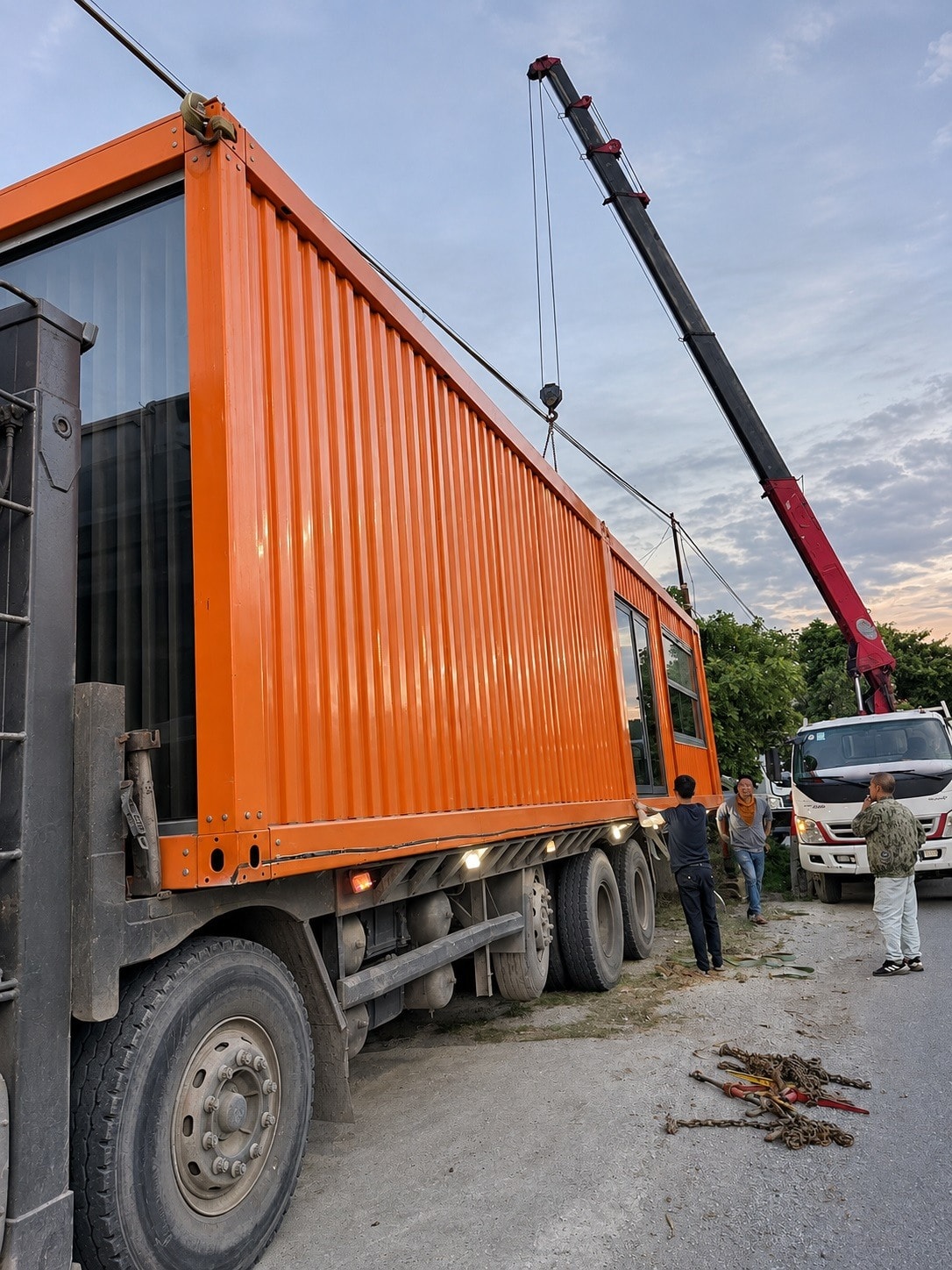
The photographs do not establish a verified sequence of events, confirm the module's condition at every point in transit, or show the module's final placement position. They are a partial visual record of the delivery phase.
Condition records and what to request
A transport photograph is one part of a condition record. A complete condition record for a delivered module should include a pre-dispatch inspection report from the factory, a packing list that identifies every component included in the shipment, a delivery note signed at handover and a post-delivery inspection record completed on site before the module is moved to its final position.
A buyer who receives only transport photographs — without the supporting documents — has an incomplete record. If damage is discovered after delivery, the transport photographs alone may not be sufficient to establish when or how the damage occurred. Requesting the full condition record at the contract stage, not after delivery, is the practical approach.
Confirming receiving scope before arrival
The receiving scope defines what the buyer is responsible for when the module arrives on site. It should be confirmed in writing before the delivery date. The receiving scope typically covers: who is responsible for unloading, what equipment is required on site, where the module will be placed temporarily if the final position is not ready, and who signs the delivery note.
Lifting arrangements and rigging are part of the receiving scope. These decisions should be made by a qualified site team working from an approved lift plan, not inferred from transport photographs. The photographs show the module on a truck and lifting equipment nearby — they do not provide rigging specifications or placement instructions.
Glazing protection during transport
The glazed panels are visible in the transport photographs. Whether the glazing was protected during transit — with film, padding or a frame cover — is not confirmed by the photographs. A buyer should ask the supplier to confirm the glazing protection method used during transport and check the glazing condition on arrival before signing the delivery note.
If the glazing arrives with damage, the condition should be recorded with photographs before the module is moved, and the damage reported to the supplier immediately. The delivery note should note any visible damage before it is signed.
Receiving checklist
- Pre-dispatch inspection report: request from the supplier before the delivery date.
- Packing list: confirm all components are included before signing the delivery note.
- Receiving scope: confirm in writing who is responsible for unloading, what equipment is required and where the module will be placed temporarily.
- Lift plan: prepared by a qualified site team; not derived from transport photographs.
- Glazing condition: check on arrival before the module is moved; record any damage with photographs.
- Delivery note: note any visible damage before signing.
Frequently asked questions
Do the transport photographs confirm the module was not damaged in transit? The photographs show the module on a truck with the glazing visible. They do not provide a complete condition record. A post-delivery inspection on site, completed before the module is moved to its final position, is the appropriate way to confirm the module's condition on arrival.
Who is responsible for unloading the module? Responsibility for unloading should be confirmed in the delivery contract before the delivery date. It is not established by the transport photographs. Lifting arrangements are a matter for a qualified site team and an approved lift plan.
What if a component is missing from the delivery? The packing list should be checked against the delivery before the delivery note is signed. Any missing component should be noted on the delivery note and reported to the supplier immediately. Signing the delivery note without checking the packing list makes it harder to resolve missing-component claims later.
View the full project page for all transport and handling photographs. For guidance on the frame assembly stage, see before the walls: a Vietnam dormitory frame assembly record. For guidance on loading and dispatch documentation, see modular loading and handover.
Contact our team to discuss delivery documentation and receiving arrangements for your project.
Topics
Explore our modular room products
Ready to discuss your project?
Our team is available to answer technical questions and provide indicative pricing for your modular construction project.
Contact Us