Pengboxingchen Editorial Team ·
A Practical Maintenance Log for Modular Cabins
How to set up a baseline handover record and owner-managed inspection log for a modular cabin — covering sealants, coatings, doors, windows, water ingress escalation and manufacturer-specific requirements.
This article is a practical owner-management guide. Maintenance intervals, coating lifespans and structural performance depend on the specific products used, the local climate and the actual use of the building. No universal intervals or guaranteed lifespans are stated here. Consult the manufacturer's documentation and qualified professionals for decisions affecting structural integrity, waterproofing and regulatory compliance.
Why a Maintenance Log Matters
A modular cabin is a manufactured building. Unlike a traditionally constructed building where the builder is on site for weeks and the owner can observe the construction process, a modular cabin arrives as a finished assembly. The owner's knowledge of what is inside the walls — the insulation type, the panel fixings, the sealant products — comes entirely from the documentation provided at handover. Without a maintenance log that records this baseline information and tracks subsequent observations, the owner has no reliable way to distinguish normal weathering from early deterioration, or to demonstrate to a warranty provider that the building has been maintained as required.
A maintenance log does not need to be complex. A simple spreadsheet or notebook with consistent entries is more useful than an elaborate system that is never completed. The key is consistency: the same observations, recorded in the same way, at regular intervals, by an identified person.
The Baseline Handover Record
The maintenance log starts at handover, not after the first problem appears. At handover, record: the cabin model and serial number (if applicable); the date of delivery and installation; the names of the manufacturer, the installation contractor and the site supervisor; the panel and frame materials as stated in the specification; the sealant products used at joints and interfaces (ask the manufacturer to identify these by product name); the coating system on the frame and panels (primer, topcoat, colour reference); the door and window hardware models; and the drainage connection details.
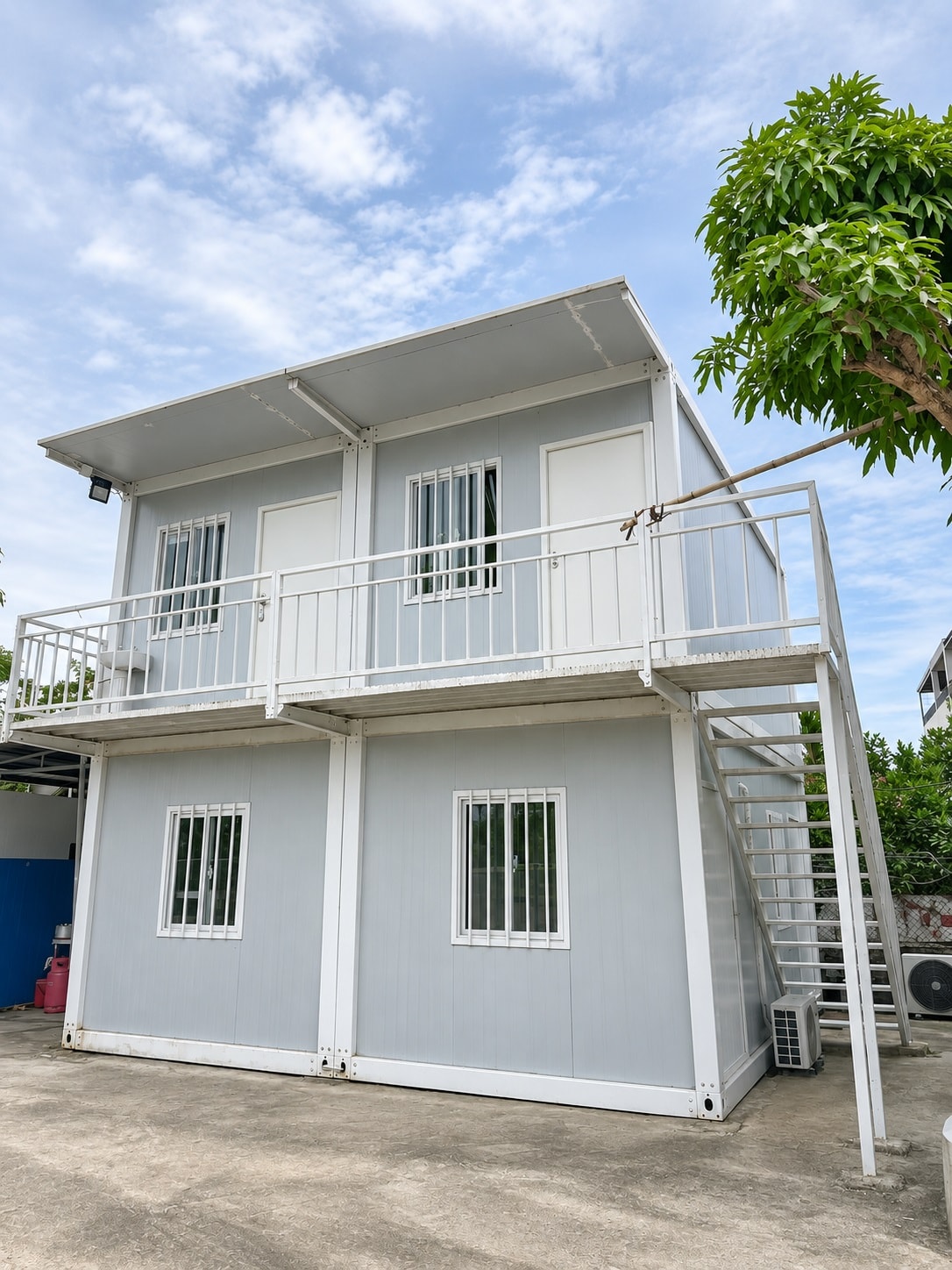
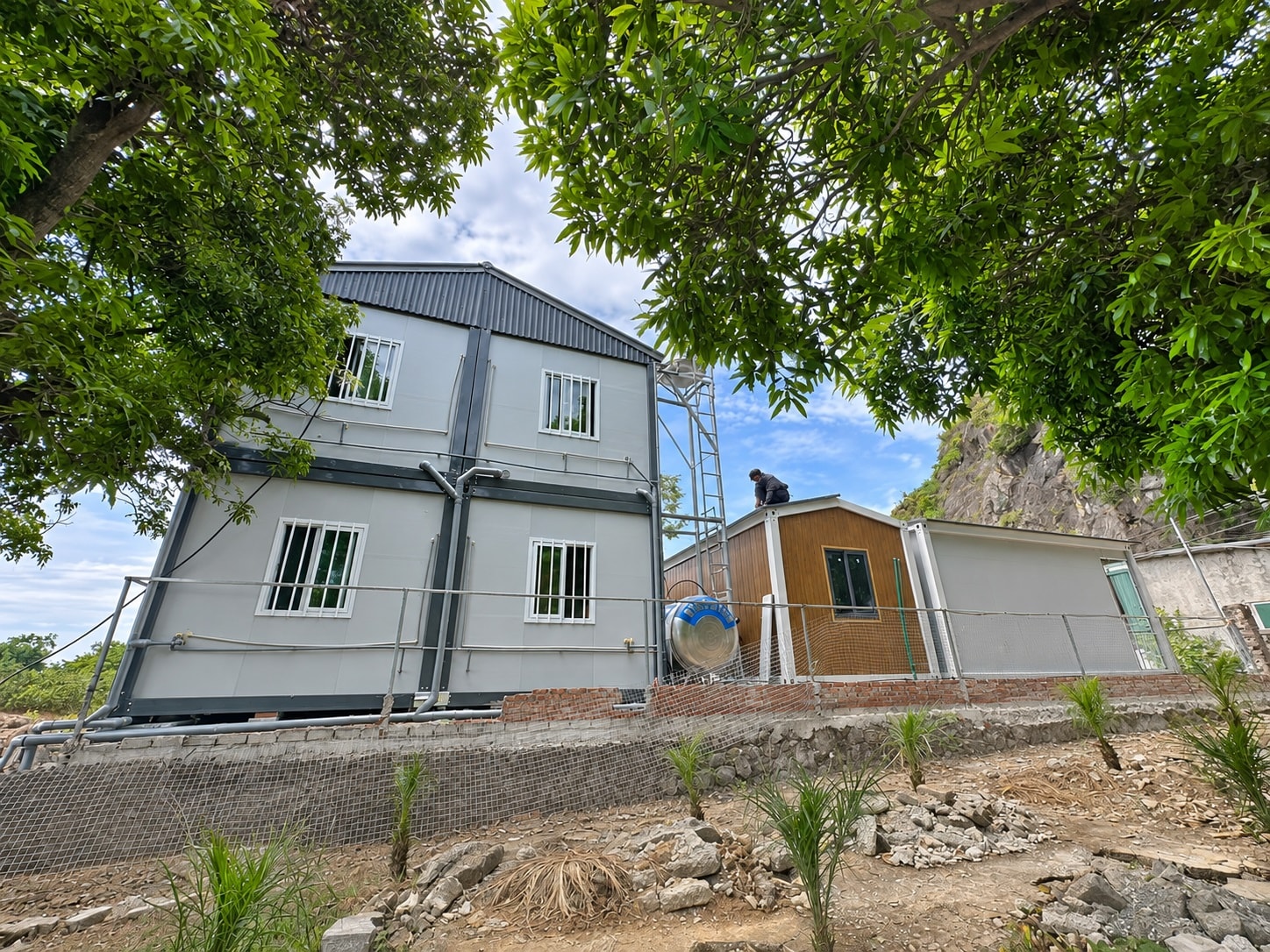
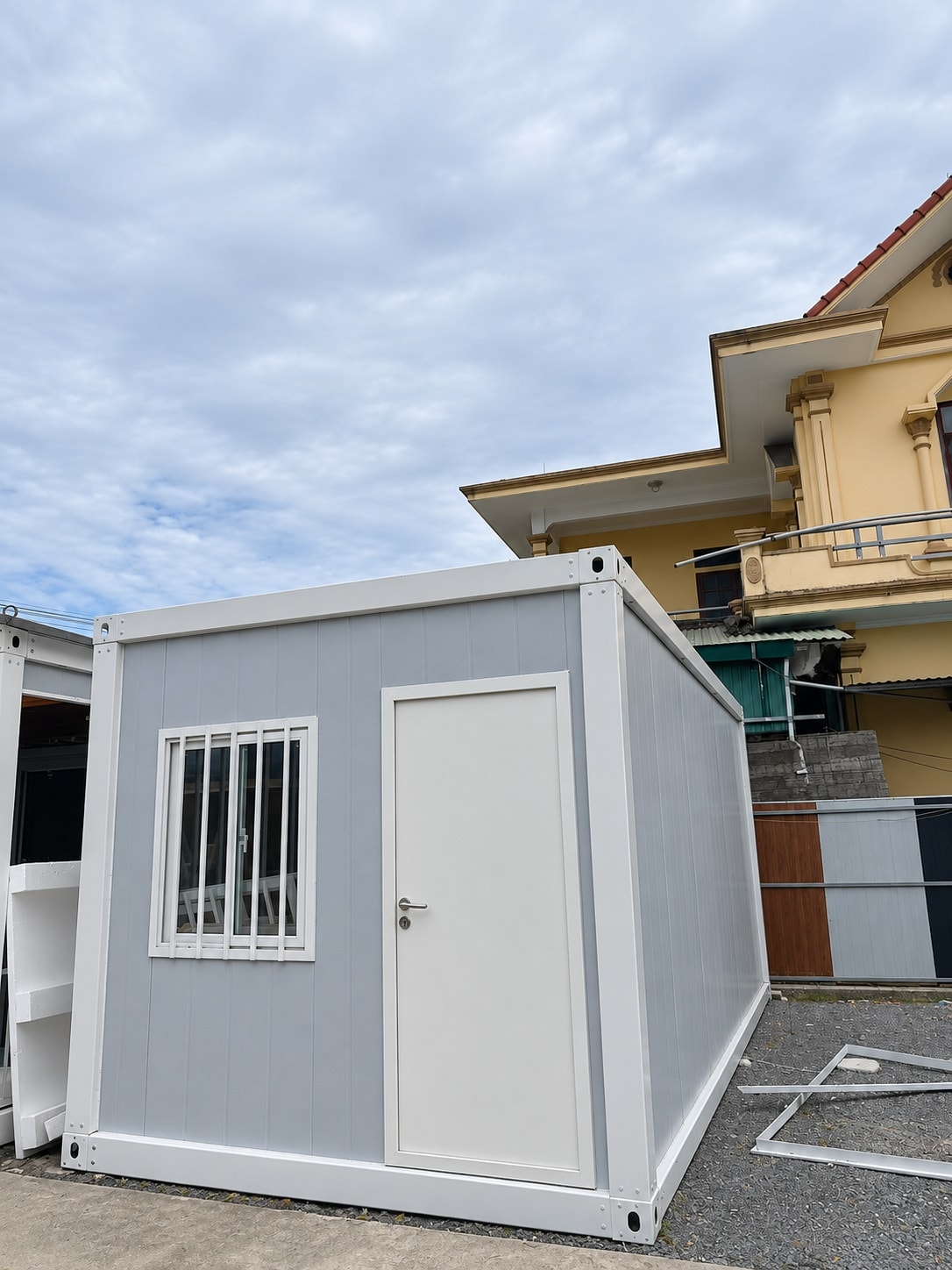
Photograph the cabin at handover from all four elevations, and photograph any details that are likely to be maintenance focus points — sealant joints at corners, the roof-to-wall junction, the door threshold, the window frames. These baseline photographs are the reference against which future observations are compared. Store them with the log, not separately.
Owner-Assigned Inspection Schedule
Assign a named person to carry out inspections and record the results. The inspection schedule should be driven by the manufacturer's documentation and by local conditions — a cabin in a coastal or high-humidity environment will require more frequent attention to coatings and sealants than one in a dry inland location. In the absence of manufacturer-specific guidance, a reasonable starting point is a visual inspection after each significant weather event (heavy rain, high wind, hail) and a systematic inspection at least twice per year.
A systematic inspection covers all accessible external surfaces from ground level. It does not require the inspector to climb onto the roof or to open wall panels. If a condition is observed that requires roof access or panel removal to investigate, that work should be carried out by a qualified contractor, not by the owner.
Recording Sealant and Coating Condition
Sealants at panel joints, corner junctions and around window and door frames are the primary defence against water entry at interfaces. Record the condition of each sealant run at each inspection: is it intact and adhered on both sides? Is there any cracking, splitting, debonding or discolouration? Is there any evidence of water tracking behind the sealant? Use the same observation points at each inspection so that changes over time are visible in the log.
Coating condition on the frame and panels affects both appearance and corrosion protection. Record any areas of chalking, fading, chipping, rust staining or blistering. Small areas of coating damage should be addressed promptly — the specific repair product and method should be confirmed with the manufacturer, as an incompatible repair product can cause adhesion failure in the surrounding coating. Do not assume that any paint product is compatible with the factory coating.
Door and Window Hardware Checks
Door and window hardware — hinges, locks, handles, closers, stays — is subject to wear and to corrosion in humid or coastal environments. Record at each inspection: whether each door and window opens, closes and latches correctly; whether there is any binding, sticking or misalignment; whether the hardware shows any corrosion or mechanical wear; and whether the door and window seals (the rubber or brush strips around the frame) are intact and compressing correctly. A door that is difficult to close is often an early indicator of frame movement or settlement; record the observation and monitor it at subsequent inspections.
Escalating Water Ingress and Deformation
Water ingress — any evidence of water inside the cabin that cannot be attributed to condensation or an open window — should be escalated immediately, not recorded and monitored. The source of water ingress in a modular cabin is often not obvious from the internal evidence; water can travel along panel joints or structural members before appearing at an internal surface. Record the location, the weather conditions at the time of discovery, and any recent weather events, and contact the manufacturer or a qualified building inspector to investigate.
Deformation — any visible change in the shape of the frame, panels or floor — should also be escalated. This includes doors or windows that have become difficult to operate without an obvious hardware cause, panels that appear to have moved relative to the frame, or floor areas that feel soft or springy. These observations may indicate structural or moisture-related issues that require professional assessment. See also our article on after heavy rain: recording and resolving water entry.
Manufacturer-Specific Maintenance Requirements
The manufacturer's documentation takes precedence over any general guidance in this article. Ask the manufacturer at handover to identify: any maintenance actions that are required to maintain the warranty; any products or methods that must not be used on the cabin (for example, pressure washing at close range, or specific cleaning chemicals that attack the panel coating); and any inspection or maintenance actions that must be carried out by a qualified contractor rather than the owner. Record these requirements in the log and ensure that anyone carrying out maintenance on the cabin has read them.
Maintenance Log Entry Format
- Date: the date of the inspection or observation
- Location: which elevation, element or room
- Observation: what was seen, in plain language
- Photo reference: filename or number of any photograph taken
- Action taken: what was done, by whom, and when
- Owner/inspector: name of the person making the entry
- Closure: date and confirmation that the action resolved the observation
Frequently Asked Questions
How long should I keep the maintenance log?
Keep the log for the life of the building. If the cabin is sold or transferred, the log is part of the building's history and should be passed to the new owner. A complete log is also useful evidence if a warranty claim is made — it demonstrates that the building has been maintained and that the defect was not caused by neglect.
What if the manufacturer does not provide a maintenance schedule?
Ask for one in writing before accepting handover. If the manufacturer cannot provide a maintenance schedule, ask them to identify the sealant and coating products used so that you can obtain the product manufacturer's maintenance guidance directly. For procurement questions, see our article on modular hotel procurement checklist and visit our products page or contact our team.
Topics
Explore our modular room products
Ready to discuss your project?
Our team is available to answer technical questions and provide indicative pricing for your modular construction project.
Contact Us