
Modular vs Traditional Hotel Construction: A Criteria-Based Comparison
A technical review of the decision criteria — interfaces, change timing, logistics and programme uncertainty — that distinguish modular from traditional hotel construction methods.
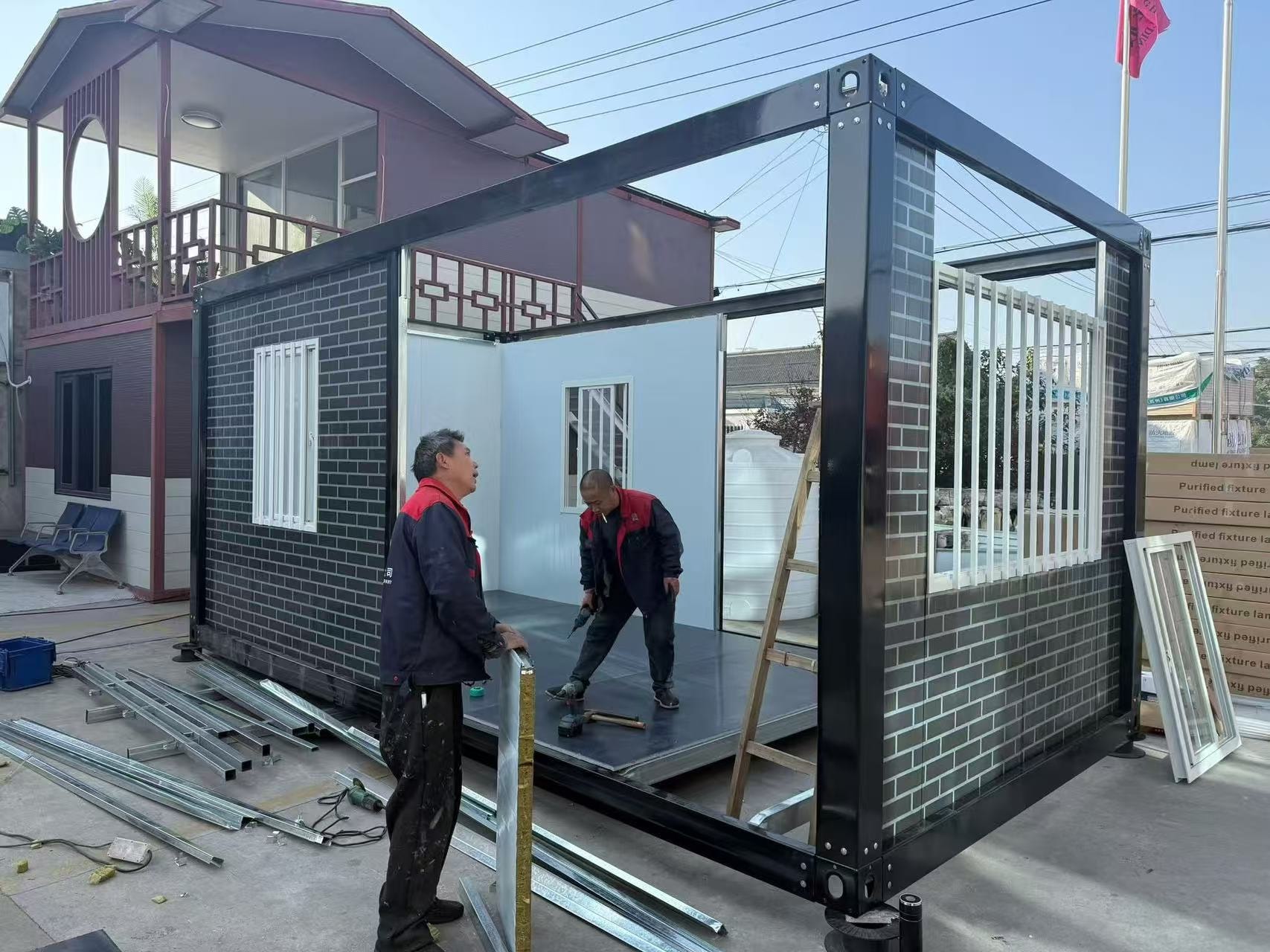
Methodology note: This article is an editorial technical review drawing on publicly available industry guidance and original analytical frameworks. It is not a peer-reviewed academic paper. The photograph illustrates container-based construction as a reference for modular building concepts; container conversion is a distinct approach from purpose-built volumetric modular construction. Project-specific decisions require qualified professional advice.
Abstract
The choice between modular and traditional construction for a hotel project is rarely straightforward. Both methods can deliver comparable outcomes in terms of room quality and building performance; the meaningful differences lie in how each method handles design interfaces, the timing and cost of changes, logistics constraints and programme uncertainty. This review presents a criteria-based comparison framework intended to support informed decision-making at project brief and feasibility stage. It does not present cost percentages or programme guarantees, which are project-specific and unreliable as general claims.
Keywords: modular construction, traditional construction, hotel development, design interfaces, programme uncertainty, procurement comparison
1. Scope and Approach
This review compares volumetric modular construction — where three-dimensional units are manufactured off-site with structure, finishes and services substantially complete — against conventional in-situ or semi-traditional construction for low-rise hotel projects. The comparison is structured around five criteria: design interface management, change timing and cost, logistics and site constraints, programme uncertainty, and quality control approach. These criteria are drawn from the authors' analysis of publicly available industry guidance and are not derived from a systematic empirical study.
The photograph above shows container-based residential construction. This is illustrative of modular assembly principles; purpose-built volumetric hotel modules are engineered to different structural, fire and acoustic standards and should not be conflated with container conversion projects.
2. Criteria Framework
2.1 Design Interface Management
In traditional construction, interfaces between trades — structure, envelope, MEP, finishes — are managed progressively on site, with some tolerance for adjustment as work proceeds. In modular construction, interfaces must be resolved in the factory before fabrication begins. This is both a discipline and a constraint: it forces early coordination but removes the ability to adjust in the field.
The practical consequence is that modular projects require a higher level of design completeness earlier in the programme. Interface drawings between modules, between the modular stack and the site structure, and between factory-installed services and site connections must be issued and agreed before production begins. Projects that cannot achieve this level of design completeness on the required timeline are at risk of programme delay or costly late changes.
2.2 Change Timing and Cost
In traditional construction, changes can be accommodated at various stages, with cost and programme impact increasing as work progresses. In modular construction, the cost and programme impact of changes rises steeply once fabrication begins, and some changes may be impractical after modules are delivered to site.
This asymmetry has important implications for client decision-making. Clients who anticipate significant design evolution during the construction phase — due to operator requirements, brand standards review or planning conditions — should assess whether modular construction is compatible with their change management process before committing.
2.3 Logistics and Site Constraints
Modular construction requires vehicle access for module delivery (typically low-loaders) and crane capacity for module lifting and placement. Sites with restricted access, overhead obstructions, proximity to live infrastructure or limited crane positioning options require early logistics assessment. These constraints are not necessarily prohibitive, but they must be identified and costed before the procurement decision is made.
Traditional construction is generally more tolerant of site access constraints, as materials are delivered in smaller loads and assembled in place. However, traditional construction on constrained sites carries its own logistics challenges, including extended programme and higher on-site labour costs.
2.4 Programme Uncertainty
Modular construction is often cited as offering programme certainty through parallel factory and site activity. This is a genuine advantage when the preconditions are met: design is frozen before fabrication, site preparation is complete before module delivery, and the logistics plan is confirmed. When these preconditions are not met, programme certainty is not achieved, and the consequences of delay may be more severe than in traditional construction because the factory production schedule is fixed.
UK government research into volumetric modular construction [1] identifies pre-project planning and clear lifecycle interface ownership as critical factors in achieving programme outcomes. This is consistent with the analysis above: programme certainty is a consequence of good planning, not an inherent property of the construction method.
2.5 Quality Control Approach
Factory production of modular units allows quality control to be applied in a controlled environment, with consistent processes, inspection access and documentation. This is a genuine advantage for elements that are difficult to inspect or rectify on site, such as waterproofing, acoustic treatment and MEP installation within the module.
However, factory quality control does not eliminate the need for site quality management. The interfaces between modules, between the modular stack and the site structure, and between factory-installed services and site connections are all site activities that require their own quality management processes.
3. Comparison Matrix
| Criterion | Modular Construction | Traditional Construction | Key Decision Question |
|---|---|---|---|
| Design interface management | Must be resolved before fabrication; high upfront coordination demand | Can be managed progressively on site; more tolerance for adjustment | Can the project achieve design freeze on the required timeline? |
| Change timing and cost | Low cost before fabrication; high cost after; some changes impractical post-delivery | Cost increases progressively; changes generally possible at higher cost throughout | How much design evolution is anticipated during construction? |
| Logistics and site constraints | Requires low-loader access and crane positioning; early logistics assessment essential | More tolerant of constrained access; higher on-site labour on difficult sites | Has a logistics pre-assessment confirmed site feasibility? |
| Programme uncertainty | Low uncertainty when preconditions met; high risk if design or site preparation delayed | More tolerant of progressive delays; programme extension is the typical consequence | Are the preconditions for programme certainty achievable on this project? |
| Quality control approach | Factory environment enables consistent inspection; site interfaces still require management | On-site inspection throughout; quality dependent on site conditions and supervision | Which elements are most critical for quality and where is control most effective? |
4. Limitations and Project-Specific Verification
This comparison framework is a decision-support tool, not a procurement recommendation. The relative advantages of modular and traditional construction depend heavily on project-specific factors including site conditions, client capability, design team experience, local supply chain and regulatory context. The framework should be used to structure the feasibility assessment, not to replace it.
Cost comparisons between modular and traditional construction are not included in this review because reliable general figures do not exist. Cost outcomes are project-specific and depend on factors including module specification, site conditions, procurement route and programme. Clients should obtain project-specific cost advice from a quantity surveyor with relevant experience.
Conclusion
The choice between modular and traditional construction for a hotel project is best made on the basis of a structured assessment of the criteria that matter most for the specific project. The framework presented here — covering design interfaces, change timing, logistics, programme uncertainty and quality control — provides a starting point for that assessment. The most important principle is that modular construction rewards early investment in planning and coordination, and penalises late changes more severely than traditional methods.
For information about modular hotel room products and the coordination support available, see our products page or contact us. Related reading: Planning a 1–4 Storey Modular Hotel and Modular Hotel Procurement Framework.
References
- UK Government, Volumetric Modular Construction Research, published 26 November 2024 (report finalised July 2022, England scope). gov.uk — supports the principle that pre-project planning and clear lifecycle interface ownership are critical factors.
- Australian Steel Institute, Modular Construction. steel.org.au — overview: volumetric units combine structure, finishes and services.
Further Reading: AIA–NIBS, Modular and Off-Site Construction Guide (2019). nibs.org.
Topics
Explore our modular room products
Ready to discuss your project?
Our team is available to answer technical questions and provide indicative pricing for your modular construction project.
Contact Us