OEM and ODM Modular Projects: Approval Processes, Change Control and Prototype Evidence
A technical review of the approval and change-control responsibilities, prototype and sample evidence requirements, and scope definition that govern OEM and ODM modular hotel room projects.
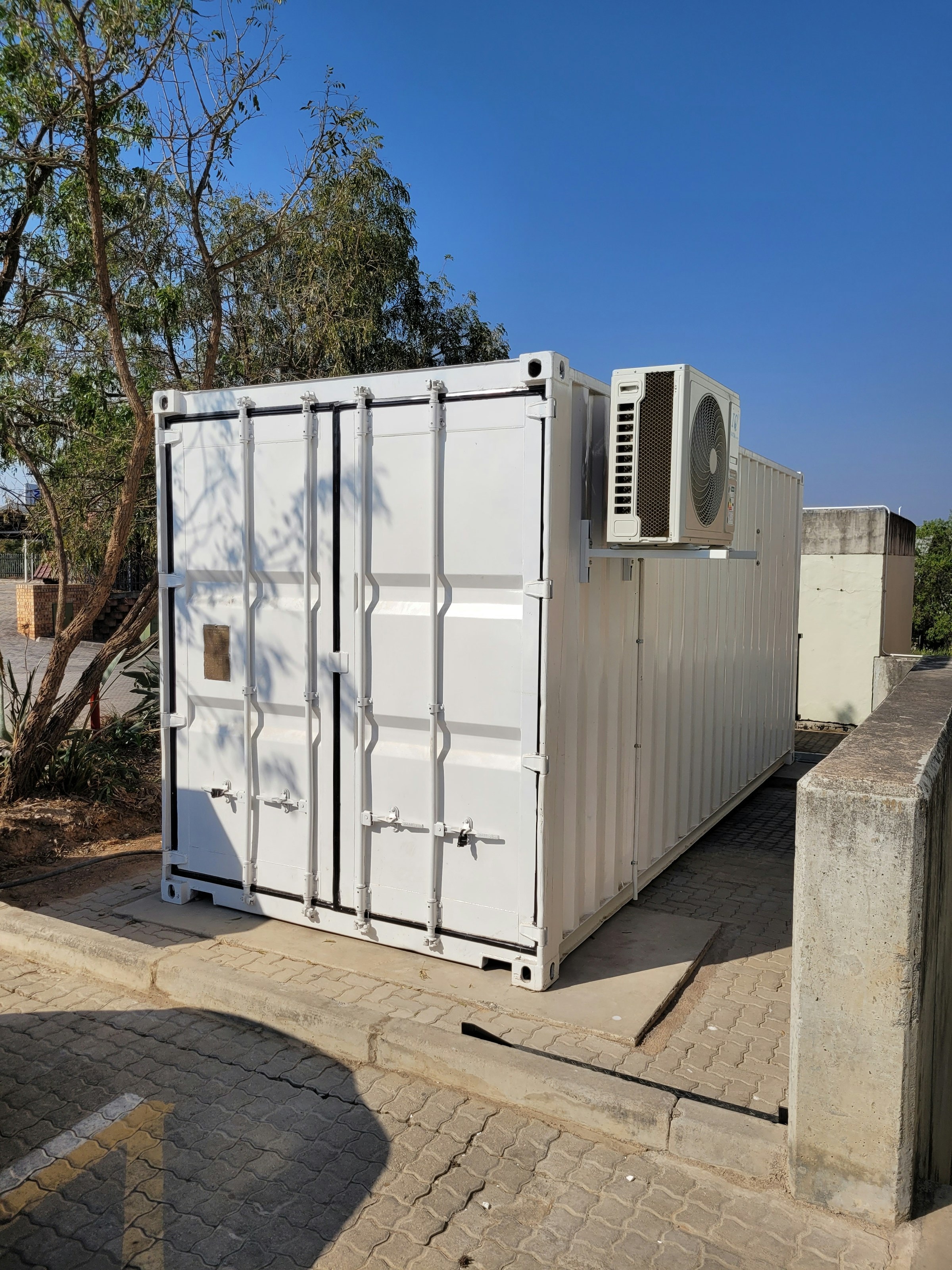
Methodology note: This article is an editorial technical review drawing on original analytical frameworks. It is not a peer-reviewed paper on product development or quality management. The photograph below shows a white container unit with external services equipment as an illustrative reference for modular unit scope; it is not a Pengboxingchen product and does not represent a recommended installation detail. Project-specific OEM/ODM agreements require qualified legal and commercial advice.
Abstract
OEM (Original Equipment Manufacturer) and ODM (Original Design Manufacturer) arrangements for modular hotel rooms involve a more complex approval and change-control process than standard product procurement. The buyer takes on a greater role in specifying, approving and accepting the design, which creates both opportunity — to achieve a product precisely matched to the project requirements — and risk — if the approval process is not structured to manage design changes, prototype evidence and acceptance criteria effectively. This review presents a framework for managing approval and change-control responsibilities in OEM and ODM modular hotel room projects.
Keywords: OEM modular, ODM modular, design approvals, change control, prototype evidence, custom hotel rooms
1. Scope and Approach
This review distinguishes between OEM arrangements — where the buyer specifies the product and the manufacturer produces it to that specification — and ODM arrangements — where the manufacturer develops the design and the buyer approves it. In practice, many modular hotel room projects involve elements of both: the buyer specifies the room layout, finish standard and performance requirements, and the manufacturer develops the detailed design within those parameters. The approval and change-control framework presented here is applicable to both arrangements, with adaptations noted where the responsibilities differ.
2. Scope Definition
2.1 What is Included in the Module Scope?
The first step in any OEM or ODM arrangement is to define precisely what is included in the module scope. This includes: the structural frame; the external envelope (walls, roof, floor); the internal finishes (floor, wall, ceiling); the bathroom pod (if included); the MEP installation within the module; and the connection points at the module boundary. Each element must be specified or confirmed as within the manufacturer's design scope.
2.2 What is Excluded?
The scope definition must also identify what is excluded from the module scope — typically: the foundation or podium; the site services connections; the external cladding system (if separate from the module envelope); and any elements that are to be installed by others after module placement. Exclusions must be as precisely defined as inclusions.
3. Design Approval Process
3.1 Approval Stages
The design approval process for OEM and ODM modular hotel rooms typically involves three stages: concept approval (confirming that the proposed design meets the buyer's brief); detailed design approval (confirming that the detailed drawings and specifications meet the agreed requirements); and pre-production approval (confirming that the production drawings and material specifications are consistent with the approved detailed design).
Each approval stage should be documented with a formal approval record that identifies the documents approved, the approving party, the date of approval, and any conditions or comments. Approval records are the primary evidence that the design was agreed before production began.
3.2 Approval Responsibilities
In an OEM arrangement, the buyer is responsible for approving the design at each stage. In an ODM arrangement, the manufacturer is responsible for developing the design, but the buyer must still approve it before production begins. The approval responsibility must be explicitly allocated in the contract.
3.3 Approval Timelines
Approval timelines must be agreed in the contract and must be realistic. Late approvals delay production and may affect the delivery programme. The contract should specify the maximum time allowed for each approval stage and the consequences of late approval by either party.
4. Change Control
4.1 Why Change Control Matters
Changes to the approved design after production begins are expensive and may affect the delivery programme. In modular construction, changes that affect the structural frame or the MEP installation within the module may require significant rework or may not be feasible after a certain production stage. A formal change-control process is essential to manage the cost and programme impact of changes.
4.2 Change-Control Process
The change-control process should require: a formal change request identifying the proposed change, the reason for the change, and the anticipated impact on cost and programme; an assessment of the impact by the manufacturer; approval of the change by both parties before implementation; and a revised approval record documenting the change.
4.3 Change Responsibility
Changes initiated by the buyer are typically at the buyer's cost. Changes required to correct a manufacturer's error are typically at the manufacturer's cost. Changes required by a regulatory authority may be at either party's cost depending on the contract terms. The change responsibility must be explicitly allocated in the contract.
5. Prototype and Sample Evidence
5.1 Prototype Requirements
For OEM and ODM projects involving a new or significantly modified module design, a prototype or mock-up is a valuable tool for verifying that the design meets the buyer's requirements before full production begins. The prototype should be specified in the contract, with clear acceptance criteria and a formal acceptance process.
5.2 What Prototype Evidence Should Demonstrate
Prototype evidence should demonstrate: that the room layout and dimensions meet the specification; that the finish quality meets the agreed standard; that the MEP installation is functional and accessible; and that the module can be transported and installed as planned. Prototype evidence does not substitute for production quality records; it confirms the design, not the production process.
5.3 Sample Approvals
For finish elements — tiles, flooring, wall coverings, furniture — sample approvals should be obtained before production begins. Sample approvals should be documented with a formal record identifying the approved sample, the approving party and the date of approval. Production must match the approved sample.
6. Approval and Change-Control Responsibility Matrix
| Activity | OEM Responsibility | ODM Responsibility | Documentation Required |
|---|---|---|---|
| Concept approval | Buyer approves manufacturer's concept | Buyer approves manufacturer's concept | Formal approval record; conditions documented |
| Detailed design approval | Buyer approves detailed drawings | Buyer approves manufacturer's detailed design | Formal approval record; approved drawing register |
| Pre-production approval | Buyer approves production drawings | Buyer approves production drawings | Formal approval record; material specifications confirmed |
| Change request | Buyer initiates; manufacturer assesses impact | Either party may initiate; both must approve | Change request form; impact assessment; approval record |
| Prototype acceptance | Buyer accepts against agreed criteria | Buyer accepts against agreed criteria | Prototype acceptance record; conditions documented |
| Sample approval | Buyer approves samples before production | Buyer approves samples before production | Sample approval record; approved sample retained |
7. Limitations and Project-Specific Verification
The approval and change-control framework presented in this review is a starting point for project-specific planning. The specific requirements will depend on the complexity of the design, the procurement route, the applicable standards and the contract terms. OEM and ODM agreements involve significant commercial and legal considerations that are outside the scope of this review; buyers should obtain qualified legal and commercial advice before entering into such arrangements.
This review does not make commercial promises about the OEM or ODM services available from Pengboxingchen. Buyers should discuss their specific requirements directly with our team.
Conclusion
OEM and ODM modular hotel room projects require a structured approach to design approval, change control and prototype evidence that is more demanding than standard product procurement. The framework presented here — covering scope definition, approval stages, change-control process and prototype requirements — provides a starting point for establishing that structure in the procurement process. The most important principle is that approval and change-control responsibilities must be explicitly allocated in the contract before production begins.
References and Further Reading
The following sources provide relevant background to this article. This editorial review has not undertaken a systematic study of industry data; statements about coordination considerations reflect the analytical framework presented here.
- Further reading: UK Government, Volumetric Modular Construction Research, published 26 November 2024 (research finalised July 2022, England scope). gov.uk — provides context on pre-project planning and lifecycle interface ownership in modular construction outcomes.
- Further reading: AIA–NIBS, Modular and Off-Site Construction Guide (2019). nibs.org — industry guide covering off-site construction coordination principles.
For information about OEM and ODM capabilities and the approval process available from Pengboxingchen, see our OEM/ODM page or contact us. Related reading: Factory Quality Records for Modular Buyers and Modular Hotel Procurement Framework.
Topics
Explore our modular room products
Ready to discuss your project?
Our team is available to answer technical questions and provide indicative pricing for your modular construction project.
Contact Us